
Yan ZHANG
Associate professor
Email : yanzh@sjtu.edu.cn
Office address : 308 Med-X Building, 1954 Huashan Road (Xuhui)



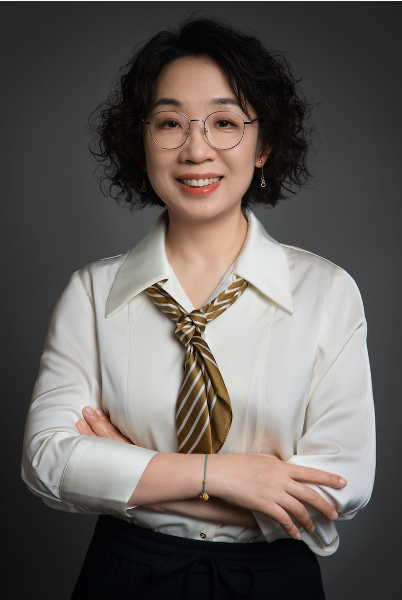
Yan ZHANG
Associate professor
Email : yanzh@sjtu.edu.cn
Office address : 308 Med-X Building, 1954 Huashan Road (Xuhui)
Dr. Zhang Yan is the Associate Professor of School of Biomedical Engineering. Her research has long centered on systematically elucidating the mechanisms underlying aberrant differentiation of disease-associated immune cells, with a specific focus on the molecular basis of macrophage polarization and tumor microenvironment remodeling. Building on these mechanistic insights, her group have identified novel therapeutic targets and pursued translational immunotherapy research. These findings have been published in leading journals including Cancer Research (2015), Cell Research (2018, 2024), and Advanced Science (2023, 2024, 2025).
12/2007-6/2012 Postdoc, Department of Microbiology and Immunology,
Weill Medical College of Cornell University
12/2005-11/2007 Postdoc, Musculoskeletal Research Center, Hospital for Joint Disease
School of Medicine New York University
9/2000-7/2005 Ph. D., School of Medicine, Shandong University
Major in Biochemistry and Molecular Biology
9/1994-7/1999 M. D., School of Medicine, Shandong Medical University
Major in Clinic Medicine
7/2012- Present Associated Professor, School of Biomedical Engineering,
Shanghai Jiaotong University
6/2005-12/2005 Instructor, School of Medicine
Shandong University
Abnormal differentiation of myeloid cells in pathological conditions.
Editorial Aboard of Global Medical Genetics (2021-present);
1. Wang LH #, Zhu J#, Ding ZQ, Xie ZY, Liu XC, Zhang FH, Meng XX, Liu XJ*, Zhang Y*, Ding XT *; Immune Predictors of Radiotherapy Outcomes in Cervical Cancer, Advanced Science, 2026, 13(16): e09784 (IF=15.1)
2. Zhang Y*, Wang ZE, Lu Y, Sanchez J.D, Li JJ, Wang LH, Meng XX, Zhong M*, Gao WQ*, Ding XT*. Region-specific CD16+ neutrophils promote colorectal cancer progression by inhibiting natural killer cells, Advanced Science, 2024, 11(29):e2403414 (IF=15.1)
3. Lin HP, Luo Y, Gong TY, Fang HS, Li H, Ye GY, Zhang Y*, Zhong M*. GDF15 induces chemoresistance to oxaliplatin by forming a reciprocal feedback loop with Nrf2 to maintain redox homeostasis in colorectal cancer, Cell Oncolgoy, 2024, 47(4):1149 (IF=4.9)
4. Qu JW, Li DW, Jin JS, Sun N, Wu JJ, Zhang Y*, Yuan XD*, Zhang M*. Hypoxia-Inducible Factor 2a Attenuates Renal Ischemia-Reperfusion Injury by Suppressing CD36-Mediated Lipid Accumulation in Dendritic Cells in a Mouse Mode Base editing effectively prevents early-onset severe cardiomyopathy in Mybpc3 mutant mice, J Am Soc Nephrol, 2023, 34(1):73 (IF=8.65)
5. Wang C, Zhang Y*, Gao WQ*. The involving role of immune cells in prostate cancer, Cancer Letters, 2022, 252:9-12 (IF=9.7)
6. Fang HS#,Huang YZ#,Luo Yang # ,Tang JY,Yu MH,Zhang Y*,Zhong M*, SIRT1 induces the accumulation of TAMs at colorectal cancer tumor sites via the CXCR4/CXCL12 axis. Cell Immunology, 2022, 371:104458 (IF=4.868)
7. Xu YJ#, Chen JJ#, Huang YZ, Luo Y, Hsieh AC, Li H, Wei XB*, Gao WQ*, Zhong M*, Zhang Y*. Patient-derived organoids in cellulosic sponge model chemotherapy response of metastatic colorectal cancer, Clin Transl Med, 2021, 11(1):e285 (IF=11.492)
8. Fang HS#,Huang YZ#,Luo Yang # ,Tang JY,Yu MH,Zhang Y*,Zhong M*, SIRT1 induces the accumulation of TAMs at colorectal cancer tumor sites via the CXCR4/CXCL12 axis. Cell Immunology, 2022, 371:104458 (IF=4.868)
9. Lu Y #, Huang YZ #, Huang Lei #, Xu YJ, Wang ZE, Li H, Zhang T, Zhong M*, Gao WQ*, Zhang Y*. CD16 expression on neutrophils predicts treatment efficacy of capecitabine in colorectal cancer patients, BMC Immunology, 2020, 21;46 (IF=3.615)
10. Wang Chao; Chen Jiahuan; Zhang Qianfei; Li Wang; Zhang Shengbo; Xu Yanjie; Wang Fang; Zhang Bing; Zhang Yan*; Gao Wei-qiang*; Elimination of CD4lowHLA-G+ T cells overcomes castrationresistance in prostate cancer therapy, Cell Research, 2018, 28(11): 1103-1117 (IF=11.615)
Address:Wenxuan Building, 800 Dongchuan RD, Minhang District, Shanghai, China
Tel: +86 21 34204018
Zip: 200241
Address:No3 Teaching Building, 1954 Huashan RD, Xuhui District, Shanghai, China
Tel: +86 21 62933344
Zip: 200030
BME WeChat
copyright: Copyright@2018 School of Biomedical Engineering, Shanghai Jiaotong University
Shanghai Jiaotong ICP Bei 05227
沪交ICP备20210179